Pevensey Farmers
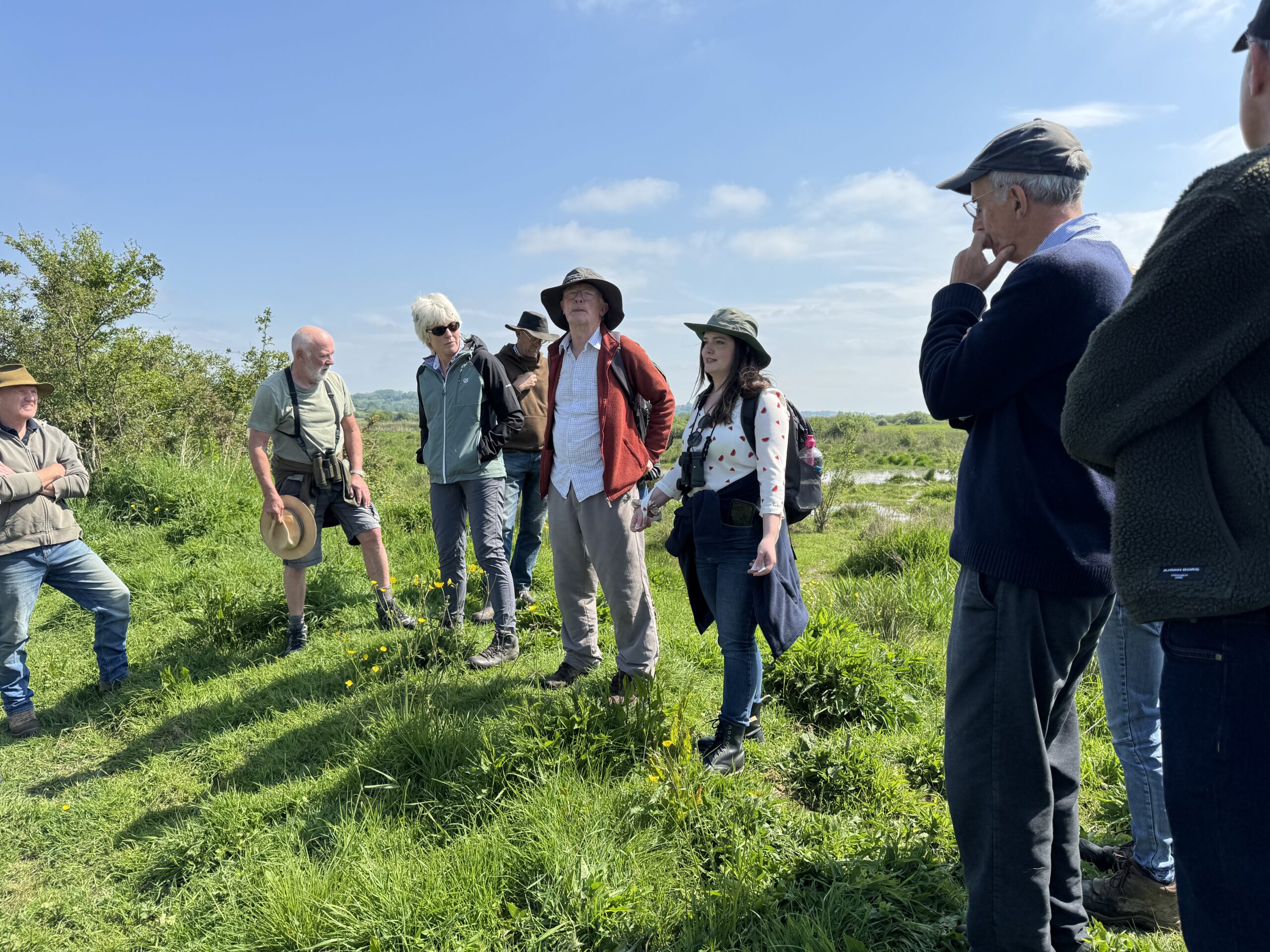
This month we ran a joint event with the the 1066 farm cluster group looking at floodplain management in the Brede Valley. Barry Yates led an informative walk with permission from the landowners, Phil Newton and Stuart Howard, who were both in attendance.
Before embarking on our walk, Barry Yates gave a brief introduction to the Brede Valley – an area he described as rich in wetland wildlife as well as being productive farmland for food production (mainly sheep farming).
Providing some context Barry introduced us to Alan Martin, a leading expert on Dragonflies and Damselflies (they have found 27 species in the valley, including some that are quite rare).
A recent survey carried out on the land also recorded over 1000 different invertebrates and a bat recording session last year revealed 11 species of bat.
We also heard from Stuart Howard, one of the farmers in the valley who had experienced tremendous problems with the Doleham stream flooding frequently (from October to March) with much of his land underwater and only passable with waders or a boat.
“It’s often 6-8 feet deep over the top of gateways and hedgerows,” he lamented.
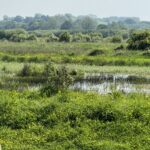
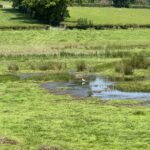
Heading out on our walk we crossed the road and into Phil Newton’s nature reserve. We walked along the footpath that hugs the Doleham stream (which eventually joins the River Brede, going downstream to Rye and Winchelsea).
Stopping to look at the wetland on Phil Newtons reserve that is in Countryside Stewardship GS9 – management of wet grassland for breeding waders.
We heard from Helen Davies from Natural England who explained they look at the conditions and feasibility of the land when deciding on eligability for GS9.
Breeding lapwing need wet grassland with different heights of grass and bare ground if possible, which is why livestock (in this instance native breed cattle) are vital to managing the habitat. She also explained that the land needs to be sufficiently open as not to provide habitat for predators such as foxes and badgers.
Barry reported that breeding pairs of Lapwing are down dramatically in the Brede Valley (and in many local wetland areas) due mainly to predation from Badgers and Foxes. Other predators include crows and birds of prey.
Highlighting this point is a small fenced in area of 0.12 of hectare at Rye Harbour said Barry which is home to four pairs of lapwing, which have been productive he said.
By not dealing with predators (both on the ground and aerial) are we just creating sink populations asked one member of the group, – where we create the right conditions but the birds have little or no chance of fledging young.
Moving on, Barry highlighted other work they hope to start carrying out to trap American mink to help the water vole population recover (something he highlighted that farmers on the Pevensey Levels are already doing). Barry mentioned a co-ordinated project led by Tony Martin is coming to Kent, Surrey and Sussex next year.
Invasive species were also discussed with a bio control being trialled for Crassula (Pigmyweed) in Rye Harbour still in its infancy said the site manager Paul Tinsley-Marshall.
Crossing over the stream onto Stuart’s land we saw a number of Lapwing now the water has receded.
With much of this land underwater between October and March – which everyone agreed isn’t good for wildlife or farming. Stuart who grazes his sheep on the land through the summer is forced to routinely drench for liver fluke.
Solutions put forward by the group included rewiggling the river further upstream – basically undoing channelisation – helping the river to break free of it’s artificial path by creating new meanders, which could help reduce the frequent flooding on Stuart’s land and provide wetter conditions for wildlife.
Concluding our walk we headed back to our cars with some members choosing to visit Phil Newton’s wildflower meadow.